

A Systematic Approach to BESS Fire Safety
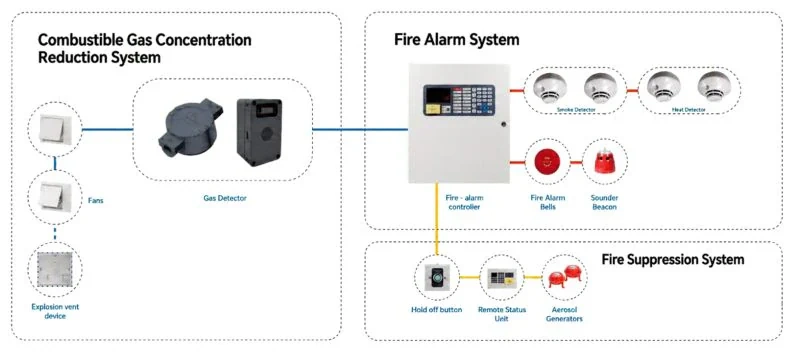
Battery energy storage system (BESS) projects often require gas detectors, fire alarm control panels, ventilation equipment and suppression systems. Yet effective fire safety depends on how these elements work together under a defined response strategy, not simply on the presence of individual devices.
1. Combustible Gas Risk Mitigation
Early gas detection, ventilation control and explosion venting can form a coordinated strategy to address the risk of combustible gas accumulation. Detector selection, thresholds and ventilation sequences must reflect the battery system and enclosure design.
2. Fire Detection and Alarm
Smoke and heat detectors, alarm notification devices and the fire alarm control panel (FACP) provide monitoring, alarm transmission and coordinated control. The cause-and-effect logic determines which protective actions follow each type of signal.
3. Fire Suppression
Where a project uses aerosol or another suppression technology, activation logic, manual hold-off functions and remote status monitoring must be integrated with the wider fire safety controls. Suppression design depends on the enclosure, hazard assessment and applicable requirements.
For each BESS project, Kesensor supports system architecture, detector selection and placement, ventilation and shutdown integration, FACP configuration, BMS/EMS interfaces, and suppression system design. The objective is a project-specific safety system that connects early warning with appropriate risk mitigation and emergency response.